Dani Arribas-Bel Digital Land
Stamps

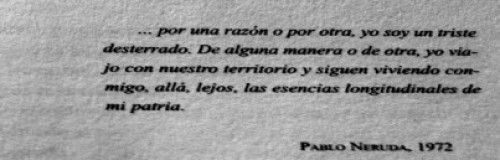
A few days ago I had to go renew my passport after almost five years of globe-trotting. Because my US visa is there and still active, I was able to keep it and it’ll hopefully let me in when I land in Phoenix next tuesday. The truth is I am no collector in general. I’m just too lazy, nomad or inconstant to store items of a kind and keep them with me over time, always having it in mind to buy a new addition when I see the chance. I am however a huge fan of physical objects that represent much more than the grams they weight. And the passport I’ve been carrying in my bag over the last five years is probably the best collector of memories and other weightless things that I can think of.

On the bus to my next task that morning, I started flipping through the pages and, before I got to my destination, I had traveled around half the planet. I started on the first page, where a 22-years-old Dani looks like sleepy and unhappy. I remember that spring morning as if it had been last may: I was in a rush to get the passport in time to take off to South Korea and the lady at the desk told me she wouldn’t take the picture I had because it was too old, so I had to go take a new one at 8am, hence the outcome. Then as I turned the pages, a stream of flashes started coming to mind in completely out of any chronological order, just the way customs officers put the country stamp when you cross the border. The US, Korea, Taiwan (or Republic of China, as it reads), Chile, Cambodia, Thailand, India, China or Morocco. And these gave rise to all the other ones that don’t get to the passport but did leave a stamp on me, like most of Europe or Mexico. I am certainly different today than I was that morning when I was photographed, and I’m sure for the most part it’s an improvement.

Changing years is an important event because I think it forces us, if only a little bit, to realize time passes, a new spring, summer, fall and winter are to come and hopefully the ones that just went by gave us all something more than a few more grams in the belly or a couple of new gray hairs. In my case, I can only feel fortunate for these incredible twelve months and hope they don’t stop when the clock rings the bells tonight, so I’m going to pretend I’m just celebrating the change of passports and that I now have a full set of new pages to be stamped. Cheers for all the new adventures to come, Peace and Love.

Passport

Review: The Self-Organizing Economy

The Self-Organizing Economy
The Self-Organizing Economy by Paul Krugman
My rating: 3 of 5 stars

Very suggesting and thought-provoking, the book was written as a spinoff of conferences Krugman gave, very much in the style of “Geography and Trade” (1992). This means the tone is very informal, making it somehow easier to grasp. He also takes a less serious approach than he would if this was academic writing, so I’d place the book between academic (some of the ideas are not trivial to get) and pop science, as the other review notes.

His main aim is to link some of his earlier economic geography models, adapted to an intra-urban context, with the literature in complexity and emerging systems. To my knowledge it’s one of the very few attempts in the direction of giving some economic foundations to many econo-physics ideas applied to cities. Having said that, I don’t fully buy the whole idea, I think whenever he gets the closest to complexity (Fourier chains, etc.) he looses the economic background, defeating the purpose a bit; also his tone in some pages, repeating the word “complex” more than he probably should doesn’t help and makes you feel he’s trying to trick you rather than honestly convincing you. The basic idea however is very appealing and it scratches the surface of a fruitful field, still open today in my opinion.

All in all, the book clearly has Krugman’s print at his most academic side in that it’s very clearly written and he follows his usual approach of light math and heavy content: don’t be misled by its 130 pages, the density of ideas and creativity per page makes them feel much longer. Good reference if you are in need of some extravagant ideas to think outside the mainstream economics box.

View all my reviews

Happy (almost) birthday

In order to mark the first anniversary of my life as a respected Doctor (to happen next December 13th.), I thought I’d throw in a post. Stealing borrowing the idea from Carson Farmer, here’s the wordcloud of my dissertation I created using the R code he points to. The usual suspects show up. Maybe not surprisingly, although right in the middle, ‘economics’ doesn’t appear very big. Comment taken, trying to work my way back into the source of all Truths :->

Dissertation word cloud

Review: The Gated City

The Gated City
The Gated City by Ryan Avent
My rating: 3 of 5 stars

The main hypothesis is that several barriers to (re)development in the most productive cities of the US have pushed population to cities with lower densities and productivity, hampering economic growth and performance.

The book is written in the spirit of Glaesser’s “Triumph of the city”, but has notably less arguments and is focused much more on the aspect of development barriers.

I think the biggest advantage over Glaesser’s is the (much smaller) time investment that it requires, it can easily be read on a long flight. The author gives a good sense of the main reasons for economic agglomerations in a tone easily understandable for the general public, and offers a good explanation of why cities are relevant for economic performance, and why their role is increasing with new technological advances.

On the minus side, I agree with the other reviewer in that the main message of this book can be summarized in much less than the already short 90 pages it takes. Also, I might be wrong, but I have the feeling the author sometimes mixes up the concept of density with that of size: some of the economic benefits of agglomeration he mentions (e.g. the Marshallian trinity) relate more to “being big” rather than to “being dense”. I think there are sufficient arguments explicitly for density so as to have to steal those from density and not mention it, confusing the reader and giving room to critics of dense cities and compact development.

All in all, it’s a decent book to inform the general public.

View all my reviews

Lives on borders

Bobbie is now waving her hand as my train from Malmoe (Sweden) to the airport in Copenhagen departs. She is only 3 years old, yet she knows more about globalization than many older people will ever know; her mother is from Sweden and his dad, David, from Spain. David used to be my scouts’ instructor and later became one of the biggest inspirations when I started to make the decissions that led to the life I’m currently living. We have been meeting over the years, usually for Christmas when we both return home, but last time I visited him at his place, however, was in the spring of 2006, while I was living in Sweden and finishing my bachelor’s.

Five years ago, David was at the beginning of a rare project called Arduino nobody else at the time except himself and a few other visionaries really understood; 21 years old Dani was starting to explore what leaving abroad by himself means; and Bobbie, of course, did not exist. This weekend, David was just back from Chicago and getting ready for his two talks about Arduino next week, one of them in Taipei (the project has been featured in Wired and The New York Times, among others); I was visiting from Amsterdam, where I am spending the summer as a postdoc visitor, in an effort to “keep one foot” in the US and the other one in Europe; and Bobbie is the living realization of the world she has been born in. It only takes the two days I have spent with her to not only completely fall in love with that smile and bright of eyes but to compile a full list of details and facts that sketch her coordinates of life, to name just a few: the obvious ability with which she switches from spanish to swedish and back depending who she talks to; her best friend Nikita, daugther of a swedish woman and a sub-saharian man; or the natural tone she has when speaking of her two homes, one in Malmoe and the other one in Spain, as if they were two rooms of the same house.

As I type these words on the plane, I am now leaving with the same mix of admiration, excitement, unrest and confussion that invades me whenever I meet David. Admiration for he has not stepped down from the category of personal inspiration; excitement for Bobbie and how David is managing to be a world-class geek rockstar and the biggest dad without loosing a bit of his personality; and the unrest and confussion that usually come whenever you find situations and interact with realities that somehow escape your own grasp, when you feel there is an extra layer of complexity beyond what you understand and feel comfortable with that you want to control but you can’t. They are probably well founded since, after all, there is nothing more complicated than figuring out magic.

Chino Moreno’s Top 13

A while ago, I talked about the inverview by The Quietus to Deftones’ Chino Moreno. I came across it recently and decided to put all the goodies from Mr. Moreno in a Spotify playlist. I like to leave it run on random in the background, because it’s pretty good at creating atmospheres. Certainly, you can see all this influence in the Deftones’ music, although it’s surprising how low-key it sounds compared to some of the band’s guitars or screams. In any case, very recommendable. Another aspect I like of creating the list and being able to listen to it is that it gives that set of 13 albums, which I’d have otherwise probably not known about, a theme and a reason that relates to the singer and makes it a more profound experience; in the era of digital remixing, it’s almost a creation in itself.

I’ll give you the hook here to go on and check the list or read the whole article, because it is well worth the time:

Some of these tracks were rejected from a film score, and I love to put on visuals when I’m making music. I collect old films, from the turn of the century or the 60s or whatever, I’ll put one up on a monitor and start writing, to me that’s one of the most fun ways of making music.

Chino Moreno

Playlist link

The two deaths of a city

This morning I covered my laziness to get out of bed with a thin layer of culture and decided to keep reading the book that’s kept me entertained lately. Much of a surprise, the beginning of a chapter struck me with a quote far more philosophical and profound than I expected, which went well beyond the story of Amsterdam. I had heard about the saying, but never thought of it in the urban context. I guess that’s my job as a “quantitative urban researcher”. Anyhow, the lines read just beautifully sad:

IT IS SOMETIMES SAID THAT EVERY PERSON DIES TWICE: THE first time when he dies, and the second when he is forgotten by the last survivor from his own time, an old man or woman. Thus a number of the dead vanish for ever when the last living memory of them dies. By the same token, most of the life of a city dies in a single generation; after that, faces, smells, sounds and atmospheres can only be reconstructed with the help of fragmentary sketches or the occasional preserved picture. Our collective memory, whether or not it is receptive to the written word, is as loose as dry sand; apart from the most essential facts, the rest is guesswork.

Amsterdam. Geert Mak.

Marching into history

This morning, while I was doing some “life sustainer” tasks (aka cleaning, cooking, laundry…) I put on my headphones one of the last episodes of  The Changing World, a series of BBC documentaries about global issues. This one was an overview about the phenomenon of marches and how peaceful colective actions have influenced the XX Century, from the marches of Gandhi to the speeches of Luther King or the Chinese Long March. Most recomended. As an advance, I’ll leave here a powerful excerpt from Ghandi, but a full listen is most recommended, very inspiring and encouraging stuff for all professional dreamers out there to see how it’s the sum of many apparently insignificant facts that make History.

I regard myself as a soldier, though a soldier of peace; I know the value of discipline and truth; I have never made a statement that the massif of India, if it became neccesary would ressort to violence. I regard myself incapable of making statements of this sort.

M. K. Gandhi

2010 Leído [english]

One year is enough for quite a few changes; or not enough for almost anything. In my case, this one leaving us now has given me time to do some reading, not much but some. Thinking about it now, as I type on the bus back to Zaragoza, my reading list has been pretty representative of feelings, moods, aspirations and frustations following me all over the world during the past 12 months.

One day like today one year ago, I was just back from Amsterdam, sweet reunion with Europe after the american adventure. I was just back in fact by chance because, luckily this doesn’t change, the rare cold and snow wave media tell us about nowadays but we used to call just winter also made a lot of us think our plane would not take off in time to be back home for Christmas. I finally did but nobody saved me from delays and airport hours to kill and then Lisbeth Salander and its second book remembered me when no flying company did.

In principle, that flight back was going to be the last one in a long while: 2010 would be a mostly homely year, finishing up without much rush my dissertation, enjoying home and getting back (althought that’s never hard) to my daily life in the city I was born and raised. Pretty far from reality. The “homely” year lasted long enough to allow me to start reading “La lluvia amarilla” by J. Llamazares, but not to finish it. And a few weeks after we all believed the earth had started bursting into pieces and Haiti and Chile was the beginning of the end, I was landing in Santiago, in an airport that truly reminded of an apocaliptical story. A few days later, my homework done and a bunch of good memories, one more plane; this time to the US for three months. In my travel bag I was carrying “Mi país inventado” by I. Allende, compilation of memories, nostalgies, personal victories and beautiful descriptions of Chile that perfectly matched the unfillable void my grandad had left thousands of kilometers away. Time in the desert brought me a ton of work and exciting people, those who make worth travelling the world across… and it also brought me “To be or not to bop“, a piece of the New York City of the 40s in the shape of a book, where jazz was almost like nowadays’ rap, which filled the “urban” space I need to be happy and I wasn’t finding in Phoenix.

Summer was all happy, proof of it is I didn’t need  the shelter of a book, since family, friends and outdoor activites happily filled my days. In August I packed up again and my first stop was Stockholm. Home of some of my happiest moments on earth, it was pretty much the same way I left it five years ago; I couldn’t help buying Lisbeth’s last one. Although I could barely read a few pages at Helsinki airport, since I quickly switched to “Gecko Tails“, a rip-off book I bought for a couple of bucks in the streets of Bangkok. Yes, I was going to be in Cambodia with a very good friend and I figured I’d be better off exchanging the adventures of a Swedish hacker by those of an American expat in the Cambodia of the 90s, a country struggling not to forget, which they can’t and shouldn’t, but to cover and get over the horror and hate of so many years. On the way back, my luggage was also carrying a beautifully dedicated copy of “Patas arriba” by E. Galeano, although that’ll have to enlarge my 2011′s reading list.

It’s september and that means “back to school”. During a week in Barcelona, I squeezed in “Pyongyang“, and that was enough for me to get a hook on reading stories with drawings. A couple of weeks in Amsterdam were enough to finish with Lisbeth and her family ghosts for once, and brought me a long list of good moments, either in the house they put me in right next to the university or in one of those cozy coffee shops downtown that make it one of the most beautiful cities I know. September also took away Labordeta and, with him, a part of that happy world from highschool years that doesn’t exist any more but in my memory.

October brought the fall, my first classes as a teacher and some other smiles that, probably because I wasn’t expecting them, felt particularly good. Almost without any conscience, I stepped in November, and in all the excitement I proudly keep from childhood of my birthday. It was also the month when I finished “La lluvia amarilla”, a short book one wants to read slowly, sadly beautiful and which came back as if it’d read my mind, as I was then trying to put a “surface of ice” in between in a desperate effort to save my self-steem. I finished November starting out a book I bought in Montpellier its last weekend: Local, a comic about Megan, a girl who, while chasing her dreams all over the US, tries to escape from her own frustrations and defeats.  On to December, a month I lived as nervous as I get until the 13th., the day I became part of that list of lucky guys who do what they love and are called Doctor for that. In the meantime, I tried to calm down and search inspiration in the pages of the history of philosophy by reading “Sophie’s world”, pending subject since highschool a good friend of mine has brought me back through the pleasure of parallel reading.

So this’ been my 2010. In the year Wikileaks reminded us the best way to avoid having your dark side exposed by others to the public is by either not having it or showing it off yourself, this’ my best attempt. As the poet puts it, “the one telling his hatred is already beggin pardon”. Here’re my readings and books that’ve accompanied me in my bag and, with them, also some of my fears, longings, fulfilled dreams and frustrations from this year worth having been lived. Peace and love for 2011.

2010 Leído

Un año da para muchos cambios; o para muy pocos. A mi éste que se nos va me ha dado para leer algunos libros, aunque no muchos. Pero, pensándolo ahora, mientras tecleo en el bus de vuelta a Zaragoza, mi lista de lecturas ha sido bastante representativa de estados de ánimo, emociones, aspiraciones y frustraciones que me han acompañado alrededor del mundo durante estos doce meses.

Un día como hoy mismo hace un año, acababa de llegar de Amsterdam, dulce reencuentro con Europa después de la aventura americana. Acababa de llegar por suerte porque, por suerte eso es algo que no cambia, al igual que este año, esa extraña ola de frío y nieve que ahora es noticia en todos los medios pero que antes se llamaba simplemente invierno, también nos hizo pensar a muchos que nuestro avión no saldría a tiempo para, como el turrón, volver a casa por Navidad. Del retraso y horas muertas de aeropuerto no me sacó nadie, pero Lisbeth Salander y su segunda entrega se acordaron de mi cuando ninguna compañía aérea lo hacía.

En un principio, esa vuelta iba a ser la última en una temporada más o menos larga: 2010 sería un año principalmente casero, terminando sin prisas y sin ajetreos mi tesis, disfrutando de casa y re-haciéndome (aunque eso nunca cuesta) a la vida social y cultural de la ciudad en la que he pasado la mayor parte de mi vida. Nada más lejos de la realidad. El año “casero” me dio para empezar a leer “La lluvia amarilla” de J. Llamazares, pero no para terminarlo. Y unas semanas después de que todos pensáramos que el mundo se rompía en pedazos y que lo de Haití y Chile era el principio del fin, aterrizaba en Santiago, en un aeropuerto que sí parecía salido de una historia apocalíptica. Unos días después, con los deberes hechos y con un montón de buenos recuerdos, otro vuelo; a Estados Unidos esta vez, y por tres meses. En mi bolsa de viaje  llevaba “Mi país inventado” de I. Allende, compendio de recuerdos, nostalgias, victorias personales y descripciones bonitas sobre Chile que se entendían a la perfección con el vacío inllenable dejado a varios miles de kilómetros por mi abuelo. El tiempo en el desierto me trajó un montón de trabajo y gente ilusionante, de la que hace valer la pena cruzar el mundo… y también me dejó “To be or not to bop“, una porción en libro de la Nueva York de los años 40, donde el jazz era casi el rap de hoy en día, que ocupó el espacio “urbano” que necesito para ser feliz y que no pude encontrar en Phoenix.

El verano fue completamente feliz, prueba de ello es que no necesité refugiarme en las páginas de ningún libro apenas, pues mis amigos, familia y actividades al aire libre llenaron mis días. En Agosto hice las maletas de nuevo, y mi primera escala fue mi tan querida Estocolmo. Escenario de algunos de los momentos más felices de mi vida, estaba (casi) igual que como la dejé hace cinco años; no pude evitar comprar el tercer tomo de Lisbeth. Aunque apenas si pude leer unas páginas en el aeropuerto de Helsinki, porque enseguida cambié a “Gecko Tails“, libro pirata que compré por un par de euros en las calles de Bangkok. Sí, me esperaban unos días en Camboya junto a un muy buen amigo y supuse que sería mejor cambiar las aventuras de una hacker sueca por las de una expatriada americana en la Camboya de los 90, un país luchando no por olvidar , que no se puede ni se debe, sino por tapar y salir adelante del horror y el odio de tantos años. En el equipaje de vuelta se coló también, dedicado con mucho cariño, “Patas arriba” de E. Galeano, aunque esa tendrá que ser ya lectura para 2011.

Con septiembre vino la “vuelta al cole”. En una semana en Barcelona se coló “Pyongyang“, y bastó para que me picara la curiosidad eso de leer texto con dibujos. Un par de semanas en Amsterdam me sirvieron casi para terminar con Lisbeth y sus fantasmas familiares de una vez por todas, y me trajeron una larga lista de buenos momentos, ya en la casita en que me pusieron al lado de la universidad o en uno de esos cafés cucos del centro que la hacen una de las ciudades más bonitas que conozco. Septiembre también se llevó a Labordeta y, con él, una porción de ese mundo feliz de los años de instituto que ya no existe sino en mi memoria.

Octubre trajo el otoño, mis primeras clases como profesor y alguna sonrisa más que no me esperaba y que, quizás por ello, sentaron especialmente bien. Casi sin darme cuenta ya era noviembre, y la ilusión de niño que orgullosamente aún conservo por mi cumpleaños. También fue el mes en que terminé “La lluvia amarilla”, libro corto que se lee despacio, tristemente precioso y que volvió a mí como si alguien me hubiera adivinado el pensamiento, cuando precisamente trataba de poner una “lámina de hielo” de por medio en una (otra) huída hacia delante por salvar mi autoestima. Terminé noviembre empezando un libro que me compré en Montpellier el último fin de semana: Local, un comic sobre  Megan, una chica que, mientras persigue sus sueños por varios estados de Estados Unidos, huye de sus frustraciones y derrotas. Y así hasta Diciembre, mes que viví nervioso como nunca hasta el 13, día en que pasé a engrosar la lista de los que tenemos la suerte de hacer lo que nos gusta y que nos llamen doctor por ello. Mientras tanto, trataba de calmar los nervios y buscar inspiración entre la historia de la filosofía leyendo “El mundo de Sofía”, asignatura pendiente desde los años de instituto que una buena amiga me ha hecho retomar a través del placer de la lectura paralela.

Pues bien, éste ha sido mi 2010. En el año en que WikiLeaks nos recordó que lo mejor que puedes hacer para que no te descubran los trapos sucios es no tenerlos o sacarlos tú mismo, éste es mi mejor intento. Como dice el poeta, “el que cuenta sus odios, ya está pidiendo perdón”. Aquí las lecturas y libros que me han acompañado en la bolsa de viaje y, con ellas, también algunos de los miedos, anhelos, sueños cumplidos y frustaciones de este año que mereció la pena ser vivido. Paz y amor para 2011.

Follow

Get every new post delivered to your Inbox.